.png)

Competitive FPS Tactical Strategies Beyond Scripts

Updated: Aug 28
The game-sense pillars — positioning, rotation, utility usage, and mental game — that hardware advantages amplify but can never replace.
A script can smooth out your recoil or automate a movement combo, but it can't read the map for you, predict a rotation, or keep your head clear after a bad round. This guide covers the core competitive FPS tactical strategies that separate consistently strong players from anyone leaning purely on equipment — and explains why hardware works best as an amplifier of skill, not a substitute for it.
Positioning: The Foundation of Competitive FPS Tactical Strategies
Good positioning wins more engagements before they even start than any mechanical skill does. Holding an angle that limits how many directions you can be flanked from, avoiding open sightlines when you don't need to cross them, and using cover as a default rather than an afterthought all compound over the course of a match.
Pre-fire discipline – check common angles before fully exposing yourself, rather than peeking blind into unknown space.
High-ground awareness – elevated positions often give a sightline and reaction-time advantage — use them when the objective allows it.
Avoid over-extending – the further you push ahead of your team, the less support you have if an engagement goes wrong.
Rotation: Reading the Match, Not Just Your Lane
Strong rotation decisions come from tracking information across the whole map — teammate callouts, minimap activity, objective timers — rather than reacting only to what's directly in front of you.
Rotate on information, not instinct alone – a teammate's callout or a sudden drop in enemy activity in one area often signals a rotation before you can see it yourself.
Time your rotations to objective phases – arriving early to contest a point is usually stronger than arriving in the middle of an active fight.
Don't abandon map control for kills – a rotation that chases a single elimination but gives up map position can cost more than it gains.
Utility Usage: Small Advantages That Compound
Grenades, smokes, and other utility are frequently under-used relative to their impact. Using utility proactively — to deny an angle, cover a rotation, or force a bad engagement for the enemy — consistently outperforms saving it defensively out of habit.
Use utility to open engagements, not just survive them – a well-placed smoke or flash before pushing changes the terms of a fight before it starts.
Communicate utility usage with your team – so a teammate's push and your utility land at the same moment instead of missing each other.
The Mental Game: Staying Sharp Across a Full Match
Tilt — the frustration and rushed decision-making that follows a bad death or a lost round — is one of the most consistent, preventable sources of lost matches at every skill level.
Reset after a bad round – a brief, deliberate pause (even a few seconds) before the next round tends to produce better decisions than reacting immediately out of frustration.
Separate the last death from the next decision – one bad engagement doesn't need to change your positioning or aggression for the rest of the match.
Track patterns, not single mistakes – if a specific type of death keeps repeating, that's worth reviewing — a single unlucky round usually isn't.
How Hardware Fits Into This Picture
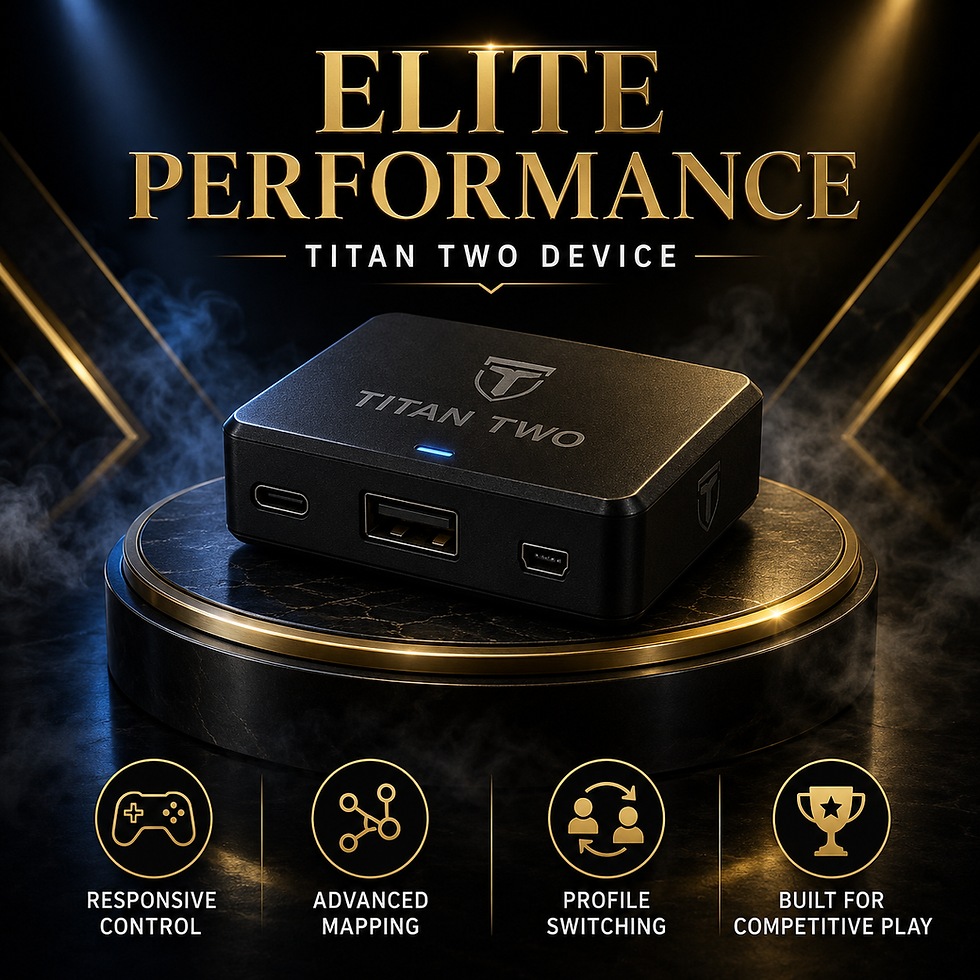
Anti-recoil, movement macros, and similar tools reduce mechanical inconsistency — they make your equipment behave more predictably. But none of that helps you read a rotation, use utility at the right moment, or reset after a bad round. The players who benefit most from scripts are the ones already building these competitive FPS tactical strategies into how they play; hardware amplifies good decision-making, it doesn't create it.
Frequently Asked Questions
Which matters more: mechanical skill or game sense?
Both compound together rather than competing — strong positioning and rotation decisions create more favorable engagements, while mechanical consistency (aim, recoil control) determines how often you win the engagements you get into.
How do I improve my mental game specifically?
Small, consistent habits — a brief reset after a bad round, reviewing patterns rather than single mistakes — tend to produce more improvement over time than trying to "not tilt" through willpower alone.
Can utility usage really matter more than aim?
In many competitive titles, a well-timed piece of utility can neutralize an entire enemy push or open a free engagement — its impact is often underrated compared to raw aim skill.
Pair Strategy With the Right Equipment
Pair Better Mechanics With Better Decisions
Browse FPS and tactical-shooter scripts built for the games you play.


Comments